En
Historical Centre
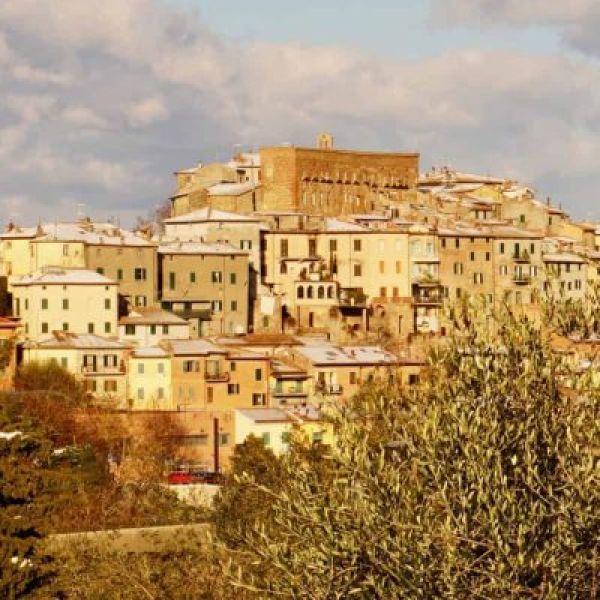
Chianciano Terme is not only synonymous with wellness and excellent food, but also with works of art and many magical places to discover. In this section, you will find a careful and detailed guide to the main monuments, churches, works of art, and points of interest: discover them now!
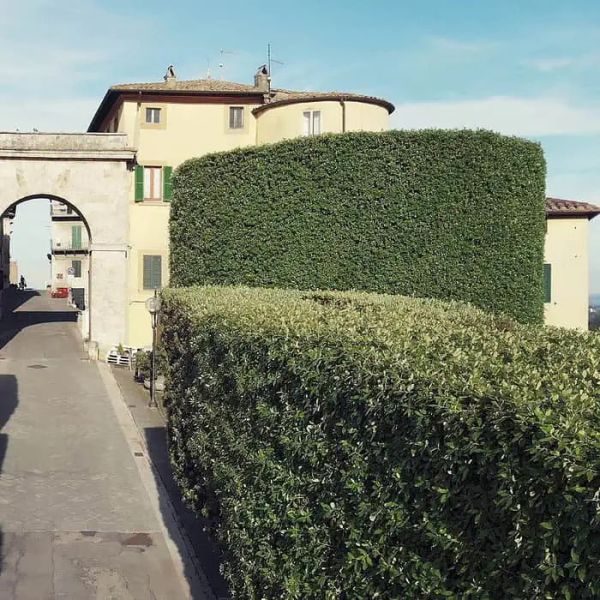
Porta Rivellini
The main entrance gate to the village is Porta Rivellini, which in ancient times was known as Porta delle Taverne, as it provided access to the part of the district characterized by numerous welcoming taverns where people sought refreshment. Later, it took the name Porta del Poggiolo from the water fountain, which still exists today, located in the immediate vicinity. It finally became Porta Rivellini because, in architecture, a "rivellino" (ravelin) defines a type of structure built to protect the gate of a larger fortification.
Address:
Viale Dante, 3A,
Chianciano Terme, SI, Italy
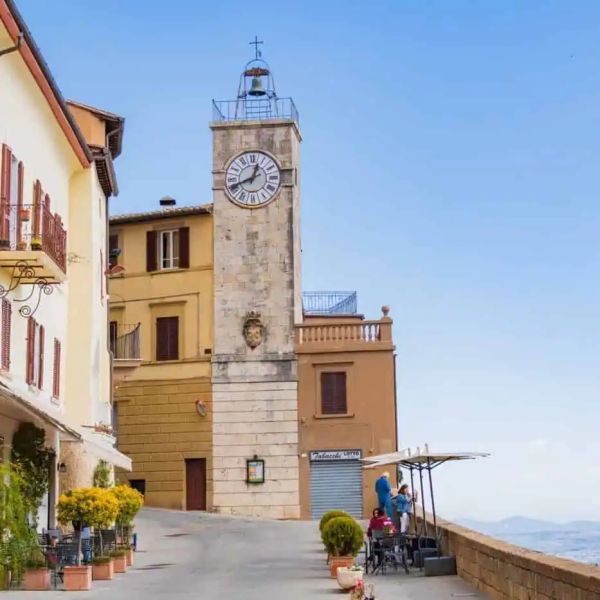
Torre dell'Orologio
The two bastions belonging to the upper gate of the Chianciano castle, which already existed by 1287, were the current Clock Tower (Torre dell’Orologio) and the building located directly across from it.
The two towers were later destroyed following the conquest of the city by the Medici. Although Chianciano had declared itself a free commune, it was forced to submit to the power of Florence. Historical sources from 1550 describe the installation of the public clock under the bell tower.
The city appointed Leonardo di Goro, a local from Chianciano, to the care and maintenance of the mechanism. Previously, the di Goro family, master bell founders, had been responsible for installing the clock on the tower of Montepulciano. Later, it was Luca Alberto di Goro who replaced the clock and forged a new bell for the tower.
Between 1557 and 1743, during the dominance of the Medici lordship, the tower underwent further interventions, reaching its current form. The Medici coat of arms, highlighted by the white marble cladding of the tower, was installed in 1557 by Grand Duke Cosimo I.
In the following centuries, the tower was restored and, in 1847, it was also raised. The clock present today dates back to 1933 and marks the time along with the tolls of the bell surmounting the tower. At the base of the tower, on the final section of the walls, there is a brass indicator that points toward Mount Amiata in the distance.
Address:
Torre dell’Orologio, Piazza Giacomo Matteotti,
Chianciano Terme, SI, Italy
Opening Times
From April 3rd to October 18th, 2026. Days and times can be consulted in the “News” section of our website.
–Torre dell’Orologio: can be visited by reservation through Pro Loco Chianciano Terme:
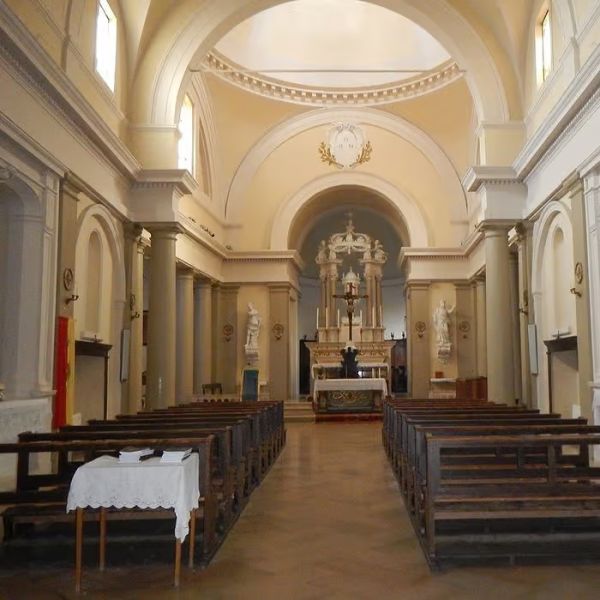
La Collegiata o Chiesa di San Giovanni Battista
The Chiesa Collegiata, built in 1289, is dedicated to San Giovanni Battista (Saint John the Baptist), the town's Patron Saint. Inside, in the left central nave, you can find a painting of the Patron holding Chianciano, depicted as it appeared in the 1500s. In the left chapel, there is a fresco representing the nativity scene by Rustichino, a Sienese painter from the 15th century. The presbytery houses a 14th-century Crucifix and a wooden sculpture of the Dead Christ by Giuseppe Paleari (1783). The Romanesque-style facade, featuring a portal adorned with spiral columns, is surmounted by a white marble statue of San Giovanni Battista dating back to the 14th century. The Patron Saint's feast was traditionally celebrated on the summer solstice; today it is celebrated on June 24th. It was once a festival of flowers and fruits, where bonfires were lit in the countryside, and people danced, drank, and sang in joy.
Address:
Collegiata San Giovanni Battista,
Chianciano Terme, SI
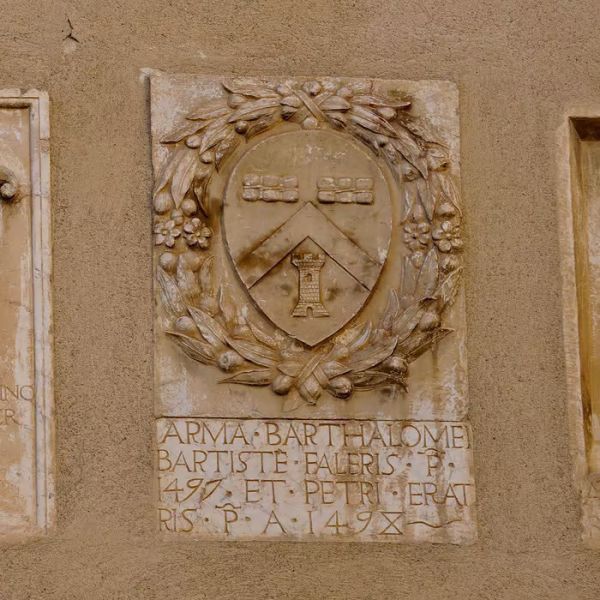
Flanked by the Palazzetto dei Podestà, its facade still adorned with the coats of arms of the ancient local magistrates (podestà), the windows above belong to the Sala De Vegni. This hall is dedicated to Leonardo Massimiliano De Vegni, born in Chianciano on Oct. 12, 1731, a famous architect known for "plastica dei tartari." This was a unique method of creating technical or artistic forms using limestone deposits from the springs located on his estate in Bagni di San Filippo, near Castiglione d’Orcia. Using this technique in 1771, he created several bas-reliefs; the only surviving example is the one produced for the Porta del Sole, which depicts the profile bust of Christ.
Address:
Piazzolina dei Soldati, Via Solferino,
Chianciano Terme, SI
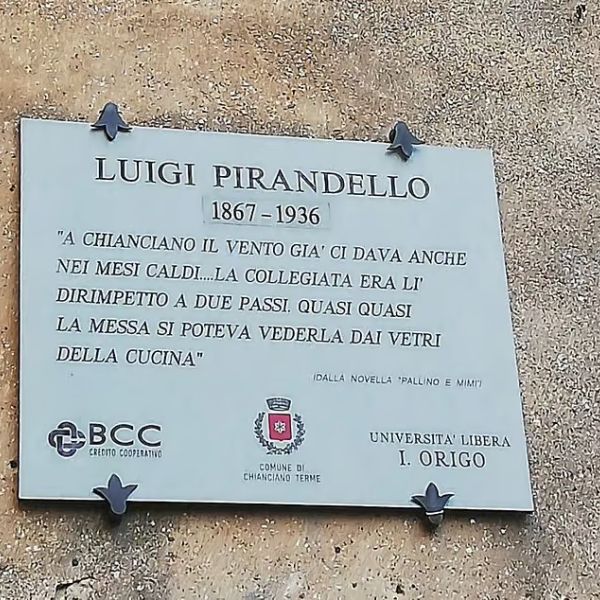
To Luigi Pirandello
On the upper left, just before the Collegiate Church, a plaque commemorates the stay of Luigi Pirandello at the Brugi–Ronchi pension, where he wrote two of his short stories, "Acqua amara" and "Pallino e Mimì," published in the collection Novelle per un anno (1922).
A walk through the old town of Chianciano Terme follows in the footsteps of Luigi Pirandello who, during a long stay for thermal treatments with his family, wrote the two short stories "Pallino e Mimì" and "Acqua Amara." The path leads from the Clock Tower (Torre dell’Orologio) to the former hospital of Chianciano—linked to the illness and hospitalization of the writer's wife—where the author met characters who, more or less clearly, inspired the traits of his protagonists.
The year 1905 stands out as a key moment in Pirandello's biography, the year in which Pirandello stayed with his family in Chianciano Terme.
It was a long stay—as was customary at the time—primarily intended to improve the fragile health and shaken nerves of his wife, Antonietta Portulano, who would later spend forty years of her life in a psychiatric nursing home.
At the time of his stay in Chianciano, the Master from Agrigento was fresh from the success of his novel "The Late Mattia Pascal" and had not yet written anything for the theatre. Many of his greatest successes were yet to come, but his spirit of observation and ability to capture the most hidden and destabilizing aspects of the human psyche were already a foundational element of his creativity. This is evident in the themes that powerfully emerge from the two short stories he wrote during his stay in Chianciano: Pallino e Mimì and Acqua Amara.
Reading these two stories reveals his full skill as a chronicler of small yet significant daily events, which together contribute to creating the "masks" that early 20th-century society wore so casually. Pirandello's Chianciano stories tell us all this and more: love, madness, masks, and human pettiness. But they also tell us about a town—Chianciano—rich in a vitality that flows into the tourist-characters of the two tales, giving us a vintage postcard of a community that already had a clear vocation as a thermal destination capable of offering all-encompassing tourist experiences.
Address:
Collegiata San Giovanni Battista,
Chianciano Terme, SI
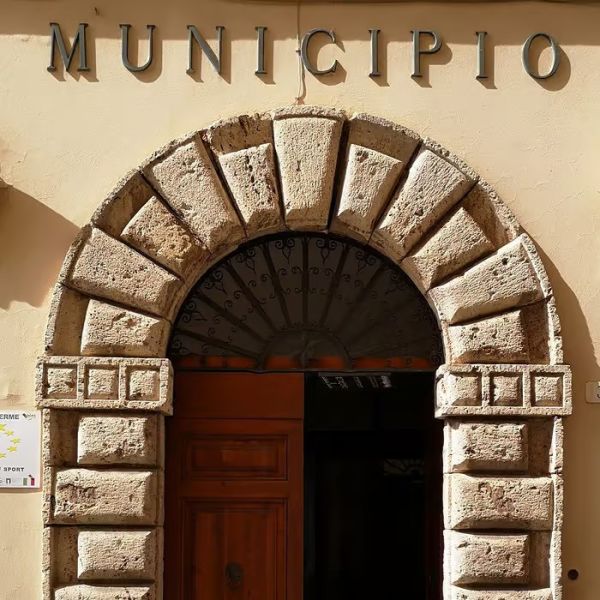
Palazzo del comune
The Town Hall (Palazzo Comunale), inside which we find the small Giubilei Chapel. It houses a replica of the Black Madonna of Loreto, commissioned by the devoted wife of the then-owner, Egisto Giubilei, who was originally from the Marche region.
Address:
Comune di Chianciano Terme, Via Solferino,
Chianciano Terme, SI
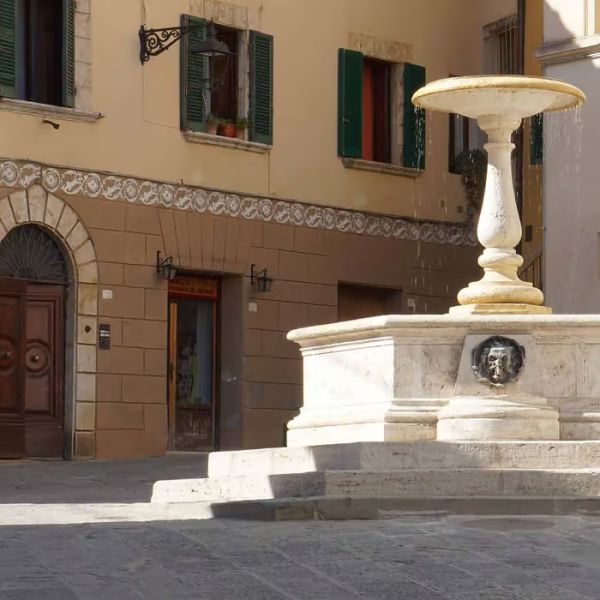
Piazza Matteotti
Splendidly adorned by an 18th-century fountain with a hexagonal plan, it is covered in marble and rests on a hexagonal tiered base.
Address:
Piazza Giacomo Matteotti,
Chianciano Terme SI
Porta del Sole
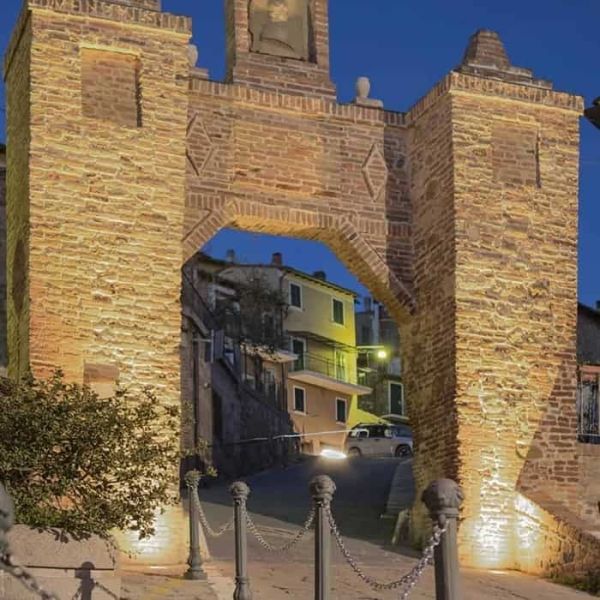
Porta del Sole is one of the three gates of the ancient medieval village of Chianciano Terme, the historic southern entrance to the town once reserved for artisans and peasants (Terziere dei Pedoni). In ancient times, Porta del Sole was known as Porta Stiglianese. As early as 1447, it featured a square tower with battlements and a drawbridge; historical sources indicate it was demolished in 1783, and in 1784, a new one was built by the local architect Dr. Leonardo Massimiliano de’ Vegni. At the top, an image of the Redeemer was placed, created by de’ Vegni himself using the "tartaro" (limestone deposits) from the Bagni di San Filippo. It was recently restored thanks to a donation from local citizen Stefano Santoni in memory of his father Gabriello, a well-known entrepreneur in the town.
Address:
Porta del Sole, Via della Croce,
Chianciano Terme, SI
Tempio della Madonna della Rosa
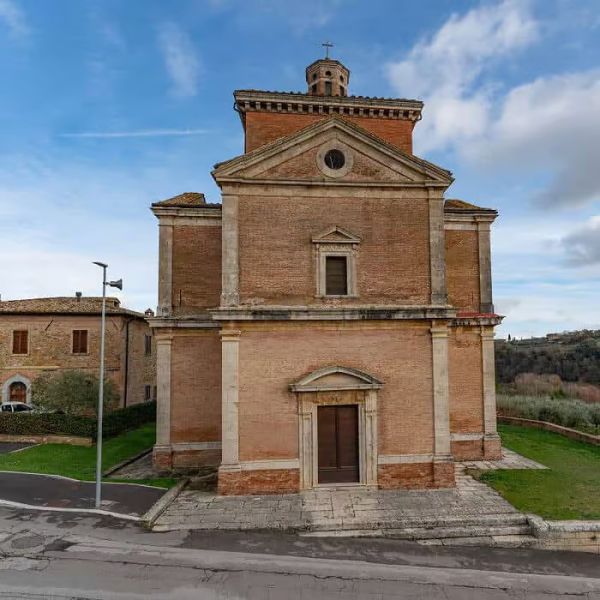
This is the most beautiful church in Chianciano Terme; it takes its name from the fresco preserved inside, depicting the Madonna offering a white rose to the Child, a work by an unknown Sienese artist of the 15th century. The building was erected between 1585 and 1599, following the Greek cross plan designed by Baldassarre Lanci da Urbino, the mastermind behind the complex. The classical facade is of great simplicity, and the four arms of the church join under a square tiburium with a polygonal lantern.
Address:
Madonna della Rosa, Via Madonna della Rosa,
Chianciano Terme, SI, Italy
Porta San Giovanni
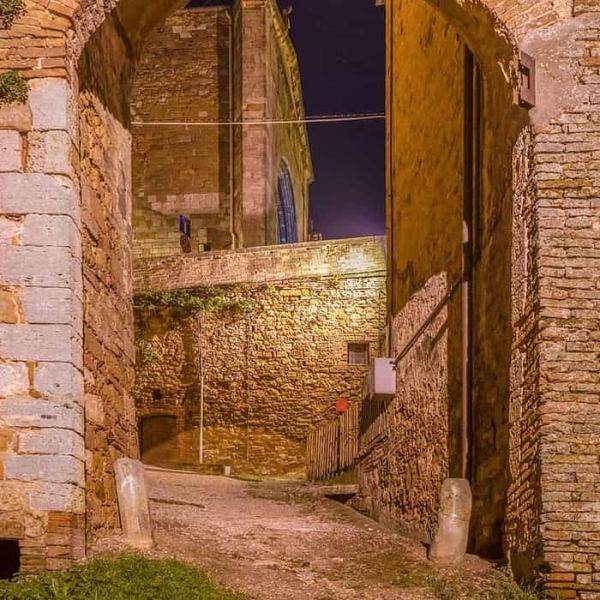
Located to the left of the Chiesa Collegiata, in medieval times it served as the entrance to the "Terziere dei Militi" (District of the Soldiers or Knights).
Address:
Porta San Giovanni,
Chianciano Terme, SI, Italy
Chiesa dell'Immacolata
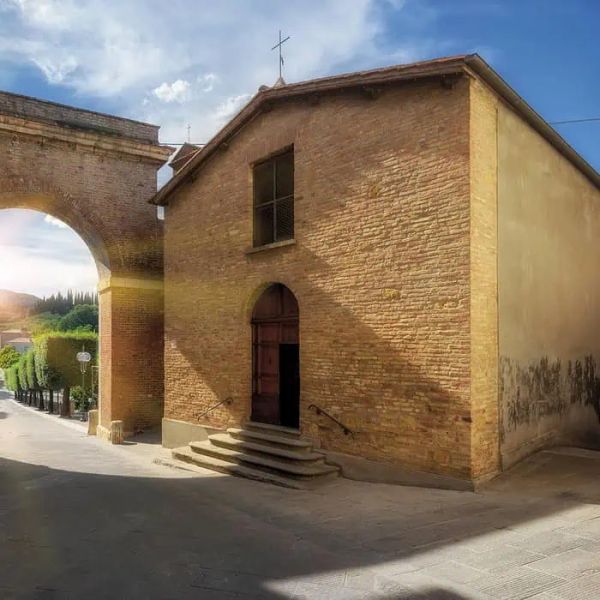
In ancient times, a hospital mentioned as far back as 1272 existed on this site. In 1475, a church was built here under the name of Santa Maria della Stella. Destroyed during the War of Siena in 1555, it was restored in 1580 and renamed the Chiesa della Misericordia. The high altar and the two side altars date back to this period. The current name dates back to 1958. The paintings featuring the "Annunciation," attributed to Niccolò Betti (16th century), and the "Holy Family," attributed to Galgano Perpignani (18th century), along with the fresco of the "Madonna della Pace" attributed to Luca Signorelli—previously located on a wall of the Church of Peace and moved here in 1789—are currently housed at the Museo della Collegiata.
Address:
Via Borgo Nuovo, 49,
Chianciano Terme, SI, Italy
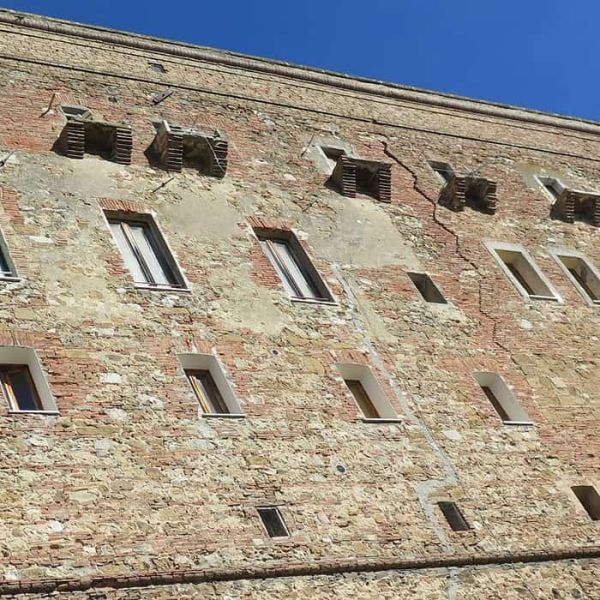
Monastero Manenti
Owned by the Counts Rimbotti Manenti, it is also known as "Il Monastero" (The Monastery) because it housed a convent of cloistered nuns in the 1300s. Ancient documents date the Castle back to the year 1000 and recount the controversies linked to the historical and political events of the territory, which was contested between Siena, Orvieto, and finally, Florence.
Address:
Fortezza Manenti, Via A. Casini,
Chianciano Terme, SI, Italy
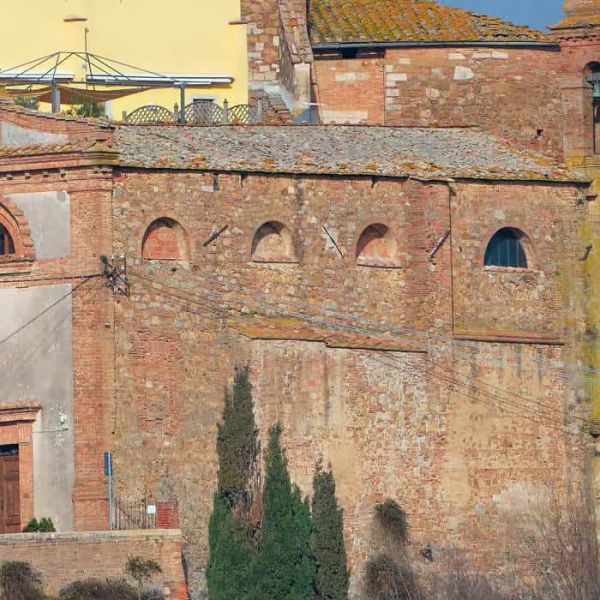
Chiesa della Compagnia di Santa Croce
Built in 1578, the interior houses an interesting 15th-century fresco depicting "The Betrayal of Judas" and the "Capture of Jesus Christ," attributed to Pomarancio, along with other paintings depicting various "Saints" and the Madonna dei Monti.
Address:
Via della Croce, 8/14,
Chianciano Terme, SI, Italy