En
What To See
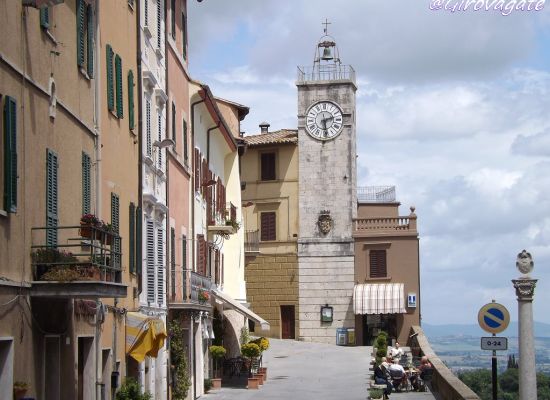
Historical Centre
Chianciano Terme is not only synonymous with wellness and excellent food, but also with works of art and many magical places to discover. In this section, you will find a careful and detailed guide to the main monuments, churches, works of art, and points of interest: discover them now!
View list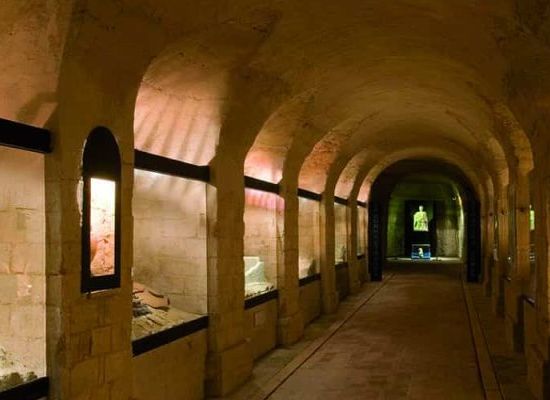
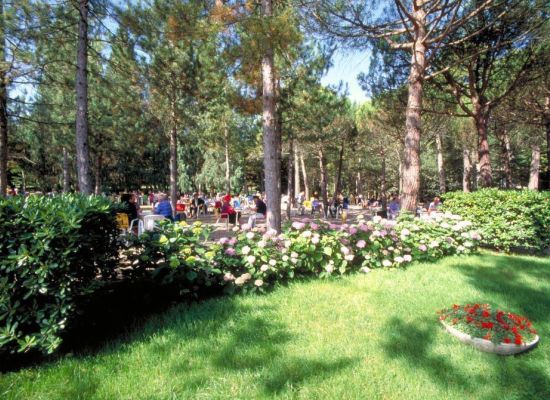
Parks
Chianciano Terme offers vast green spaces and recreational areas for all ages. From historic thermal parks, where you can regenerate amidst nature and wellness, to playgrounds and adventure parks for children and sports enthusiasts, as well as dedicated areas for our four-legged friends. In this section, you will find a complete guide to the town's parks and outdoor facilities: discover the "green" side of Chianciano!
View list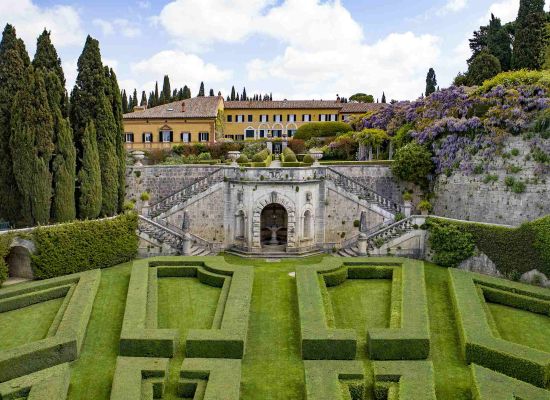
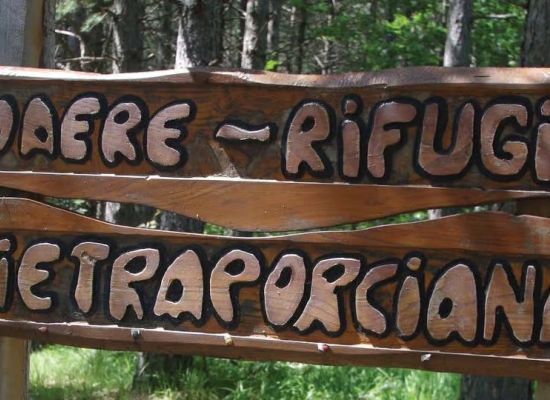
Pietra Porciana Reserve
Pietraporciana Nature Reserve was established in 1996, covering an area of about 341 hectares between the Val d’Orcia (UNESCO World Heritage Site since 2004) and the Valdichiana, between the municipalities of Chianciano Terme and Sarteano, in the southern part of the province of Siena.
The Reserve extends over a part of the ridge between the two valleys, and it is one of the few points from which you can admire both valleys in their full extension. The ridge continues south to Mount Cetona (1,147 m), while to the southeast, beyond the Val d’Orcia, you can see Mount Amiata (1,738 m), clearly visible from the Reserve and the Visitor Center.
The Reserve reaches a maximum height of 847 meters above sea level; the Visitor Center is located at 791 meters; the lowest part of the Reserve coincides with the course of the Astrone stream, at an altitude of 400 meters above sea level.
The Reserve is surrounded by woods and the typical post-sharecropping landscape of this part of Tuscany, with arable land and pastures. You can get there by following two roads: from Chianciano or from Sarteano, both along a gravel road, in the midst of an incredible countryside landscape.
The Reserve has several trails, paths, gravel roads, both in the forest and in the countryside, with many equipped areas where you can stop and rest, whether you are traveling on foot, by bicycle or on horseback.
From here, you can easily reach the cities of art (Pienza and Montepulciano), historic towns of the Val d’Orcia (from San Quirico to Castiglione d’Orcia), medieval towns such as Sarteano, country villages such as the very close Castiglioncello del Trinoro or Monticchiello, noble estates with art gardens such as Villa La Foce, and then many valuable hot springs, from those of Chianciano Terme to San Casciano dei Bagni, Bagni San Filippo and Bagno Vignoni.
In Pietraporciana, it is most likely you won’t be able to use your phone, due to a weak phone coverage. At times, you might struggle in contacting us by phone, however, here are our contacts:
Phone: +39 327 348 1619
email: riservapietraporciana@gmail.com
Facebook page: Pietraporciana – Reserve Visitor Center
Instagram account: pietraporciana_centro_visit

History
The first and original ring of the wall, with some square towers, started from the place where today you can see
the Clock Tower and turned around the fortress of Sant’Angelo (formerly the Monastery) up to Porta San
Giovanni. From here, the original walls of the castle continued behind what was the Convent of San
John the Evangelist (next to the current Church of San Giovanni), where there was a fortification made with
a “horn” shape – hence the name Contrada del Corno (of the horn) – surrounding the town. From there, it continued
along the Compagnia della Croce, where there was a squared tower.
From here the walls continued, and are still clearly visible today, until you get to Porta del Sole. The walls
then went up the slope once called “le Casacce,” then called Contrada delle Casacce, and they
ended at the Clock Tower.
The Contrada delle Taverne, on the other hand, was the plain area behind the current Church of the Immaculate Conception. You can
see by taking immediately, from Porta Rivellini, after this church, the first road that can only be walked on the
left; this road leads you to the parking lot in Borgo Nuovo.

The following walled enclosure, the one we can clearly see today, was added in 1349. The walls were then enlarged, and the gateway to the medieval center was brought to the Clock Tower, where formerly
the ancient Porta delle Taverne was located, today Porta Rivellini, following a straight line, in what
at the time it was referred to as “Fosso” road.
In ancient times, Porta Rivellini had three towers, one square and two round: The walls erected in 1349 from this
gate join up to Porta del Sole, to continue along the Compagnia della Croce, the Church of St.
John and continue, like the old fence, along what are still called “the
Carbonaie,” the former vegetable garden of the St. Angelo Conservatory (former Monastery) up to Porta
Rivellini
The town of Chianciano is surrounded by walls toward the south with two gates, Porta del Sole (formerly named
Stiglianese), Porta Rivellini (formerly called first ‘delle Taverne’ and then ‘del Poggiuolo’ located
from the northwest side, now the main entrance to the village.
These old walls went around Sant’Angelo to then end at Porta San Giovanni and from there, following
what used to be the Convent of St. John the Evangelist, where there was a fortification made of horn that
surrounded Pieve and Episcopio (Bishop’s Palace) and continued along the Company of the Cross, where there was a squared tower. This area was called Contrada il Corno.
The walls continued until they reached, in a steep descent, the old Porta Siglianese, today Porta del
Sole, and from here, the wall defending the Pieve went up through what was called the Contrada delle Casacce and rejoined the gateway located next to the Clock Tower.
Entering through Porta Rivellini, immediately after the arch is the Church of the Immaculate Conception, whose names were, in 1455,
Santa Maria della Stella and in 1580 “della morte” (of the death) because it was entrusted to the Confraternity of Death. Here once
there was the church of Borgo alle Taverne (1317) with a hospital and a tower; the tower had to
be restored in 1576 but the building was abandoned and the new Church of Santa Maria della Stella was built, where the fresco of Madonna della Pace was placed in 1789, which some documents describe together
with the patron saints and which is attributed to Pietro Perugino or Pietro da Cortona and others to Signorelli.
At the end of via Casini stands the elegant and sober Clock Tower: it has a medieval structure but was remodeled in later periods when its marble cladding was added. On the front it has
the Medici coat of arms added when the Signoria of Florence had final control of the town.

Piazza Matteotti has, to the right and left, two buildings in which the town mayors lived
the Town Hall building and in the center a beautiful fountain made in the 18th century,
hexagonal, covered with marble and a staircase that is hexagonal too. In the center rises the column
supporting the disk from where water spills.
To the left of Piazza Matteotti, tou can get to the Manenti Castle, also known as the Monastery, surprising and impressive for the
silence of this building. A document from 1072 reports that the castle was then ruled by the Counts Manenti
lords of Chiusi, Sarteano and Chianciano who in 1229 tied this fief to Siena. It is known that once their
domination ended, between 1264 and 1276, Chianciano also flourished as a town and became a free municipality, although it was always disputed between Orvieto and Siena and then succumbed to Florence, like all of Tuscany, after a resistance that almost destroyed it (1557).
Continuing from Piazza Matteotti, take Via Solferino and you will come to Piazzolina dei Soldati, where the Palazzo dell’Arcipretura is located and where the Museum of Sacred Art is housed.The city-owned Palazzo de’ Vegni was built between the 18th and 19th centuries. In it, interesting exhibitions are set up and
as well as other cultural events.
Leonardo Massimiliano de’ Vegni was one of the best known figures of the 18th century: he was a writer and artist. He conceived the decoration of the dome of the Church of Madonna della Rosa.
Via Solferino finally, ends up into the square in front of the Collegiate or Church of St. John the Baptist.
All that remains of the ancient 13th-century building is the beautiful Romanesque portal characterized by a decoration of concentric arches. The nave is characterized by a large arch resting on projecting columns and the trabeated colonnade of the transept area.
Continue to the Porta del Sole, which has two side towers ending in a kind of stepped spire with an arch in the center with the profile of a half-hexagon.
Beyond the Porta del Sole, after a few meters, stands the Temple of Madonna della Rosa, the most beautiful church in Chianciano Terme, designed by Baldassarre Lanci, in 1569, architect of the Duke of Urbino. Inside
there is, painted on one wall, the image of Our Lady of the Rose, who was considered the patron saint of Orvieto, with Saints John and Bartholomew, the patron saints of Chianciano Terme, next to her. Singular on the pillar
of the entrance, is the depiction of a scene of rural life; this is an evidence showing that the construction of the religious building was supported by farmers in the area.